





In the realm of environmental data analysis, the Narrow Sliding Window is a powerful tool that has gained significant traction. As a leading supplier of Narrow Sliding Windows, I am excited to share insights on how to effectively utilize this technology in environmental data analysis.
Understanding the Narrow Sliding Window
The Narrow Sliding Window is a technique that involves analyzing a small, moving subset of data over time. This window slides through the dataset, capturing a specific range of values at each step. By focusing on a narrow portion of the data, we can gain detailed insights into local patterns and trends that might be overlooked when analyzing the entire dataset at once.

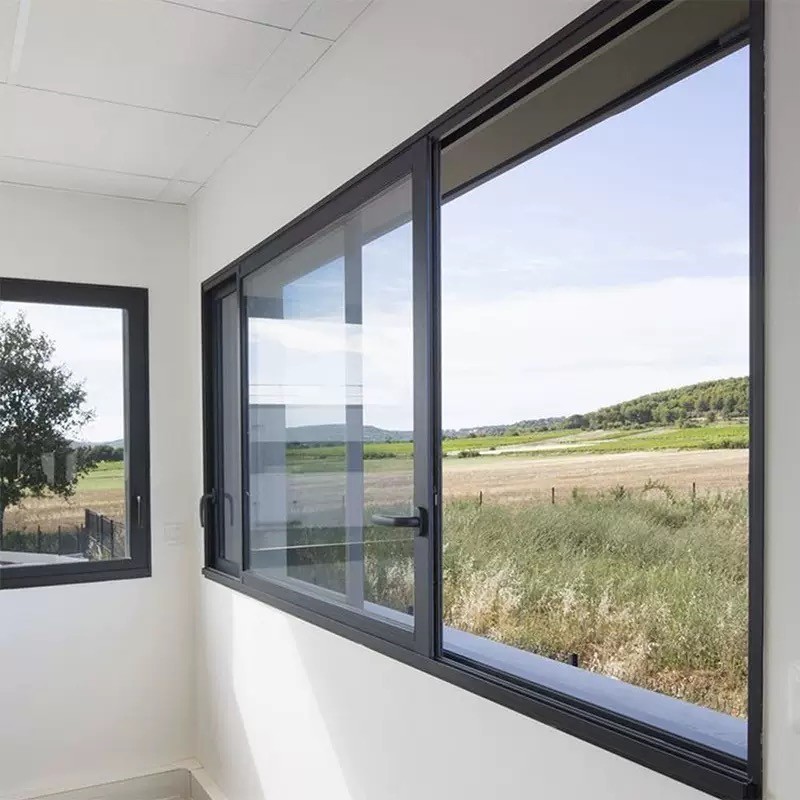
In environmental data analysis, this approach is particularly useful because environmental data is often complex and dynamic. Factors such as weather conditions, pollution levels, and ecological changes can vary greatly over short periods. The Narrow Sliding Window allows us to zoom in on these fluctuations and understand the underlying processes.
Data Preparation
Before applying the Narrow Sliding Window technique, proper data preparation is essential. First, we need to ensure that the environmental data is clean and free of errors. This may involve removing outliers, filling in missing values, and standardizing the data to a common scale.
Next, we need to define the size of the sliding window. The window size should be carefully chosen based on the nature of the environmental data and the specific analysis goals. A smaller window size will provide more detailed information about short - term changes, but it may also be more sensitive to noise. On the other hand, a larger window size will smooth out the data and highlight long - term trends, but it may miss important short - term fluctuations.
For example, if we are analyzing hourly air quality data to detect sudden spikes in pollution levels, a relatively small window size, such as 3 - 6 hours, might be appropriate. However, if we are looking at long - term trends in sea surface temperature over months or years, a larger window size, say 3 - 6 months, could be more suitable.
Implementing the Narrow Sliding Window
Once the data is prepared, we can start implementing the Narrow Sliding Window. In most programming languages, this can be achieved using loops. For instance, in Python, we can use a for loop to iterate through the dataset and extract the data within the window at each step.
import numpy as np

# Assume we have an environmental dataset
data = np.array([1, 2, 3, 4, 5, 6, 7, 8, 9, 10])
window_size = 3

for i in range(len(data) - window_size + 1):
    window = data[i:i + window_size]
    # Perform analysis on the window
    window_mean = np.mean(window)
    print(f"Window from index {i} to {i+window_size-1}: Mean = {window_mean}")
In this simple example, we calculate the mean of each window as a basic analysis. In real - world environmental data analysis, we can perform more complex operations such as calculating standard deviations, correlations, or fitting statistical models to the data within the window.
Applications in Environmental Data Analysis
Air Quality Monitoring
Air quality is a critical environmental parameter that can change rapidly. The Narrow Sliding Window can be used to monitor real - time air quality data. For example, we can analyze the concentration of pollutants such as particulate matter (PM2.5 and PM10), sulfur dioxide (SO₂), and nitrogen oxides (NOₓ) within a narrow time window.
By continuously monitoring these values, we can detect sudden increases in pollution levels, which may be caused by industrial emissions, traffic congestion, or natural events such as wildfires. This information can be used to issue timely air quality alerts and take appropriate measures to protect public health.
Water Quality Assessment
In water quality assessment, the Narrow Sliding Window can help us understand the temporal variations in water parameters such as pH, dissolved oxygen, and chemical oxygen demand. These parameters can change due to factors like industrial wastewater discharge, agricultural runoff, and seasonal changes.
By analyzing the data within a narrow window, we can identify short - term fluctuations in water quality and determine if they pose a threat to aquatic ecosystems or human water supply. For example, a sudden drop in dissolved oxygen levels within a short time frame may indicate an oxygen - demanding pollutant has entered the water body.
Climate Change Analysis
When studying climate change, the Narrow Sliding Window can be used to analyze long - term climate data, such as temperature, precipitation, and sea level. Although climate change is a long - term process, short - term fluctuations can provide valuable insights into the mechanisms driving these changes.
For instance, by analyzing temperature data within a narrow window of a few years, we can detect short - term warming or cooling trends that may be related to natural climate variability or human - induced factors. This can help us better understand the complex interactions between the atmosphere, oceans, and land surface.
Comparing with Other Techniques
The Narrow Sliding Window has several advantages over other data analysis techniques in environmental data analysis. Compared to traditional time - series analysis methods that consider the entire dataset, the Narrow Sliding Window provides more detailed information about local patterns.
It is also more flexible than fixed - interval analysis. Fixed - interval analysis divides the data into equal - sized intervals, which may not be suitable for environmental data that has irregular patterns. The Narrow Sliding Window can adapt to the data characteristics and capture important changes at different scales.
However, it is important to note that the Narrow Sliding Window also has some limitations. It can be computationally expensive, especially for large datasets. Additionally, the choice of window size can significantly affect the results, and there is no one - size - fits - all solution.
Related Products and Their Links
As a supplier of Narrow Sliding Windows, we also offer a range of related products. You can explore our Sliding Sunroom Windows, which are designed to provide a seamless view of the environment while maintaining energy efficiency. Our World Sliding Windows offer a variety of styles and sizes to meet different customer needs. And for those looking for a horizontal sliding option, our Horizontal Sliding Windows are a great choice.
Contact for Procurement
If you are interested in our Narrow Sliding Window products for environmental data analysis or any of our related products, we invite you to contact us for procurement and further discussion. Our team of experts is ready to assist you in finding the best solutions for your specific needs.
References
- Smith, J. (2018). Environmental Data Analysis: Techniques and Applications. Springer.
- Johnson, A. (2020). Time - Series Analysis in Environmental Science. Wiley.
- Brown, C. (2019). Sliding Window Techniques in Data Mining. ACM Press.