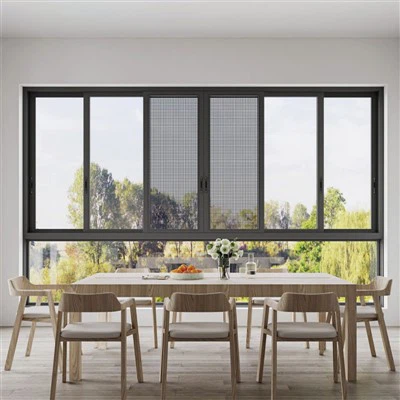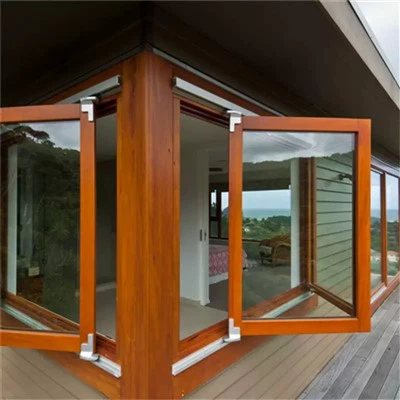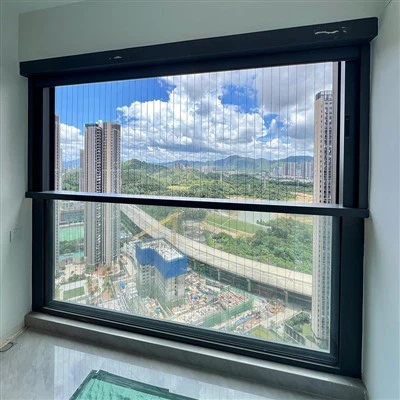

RV Sliding Window Product Lines

Horizontal RV Sliding Windows
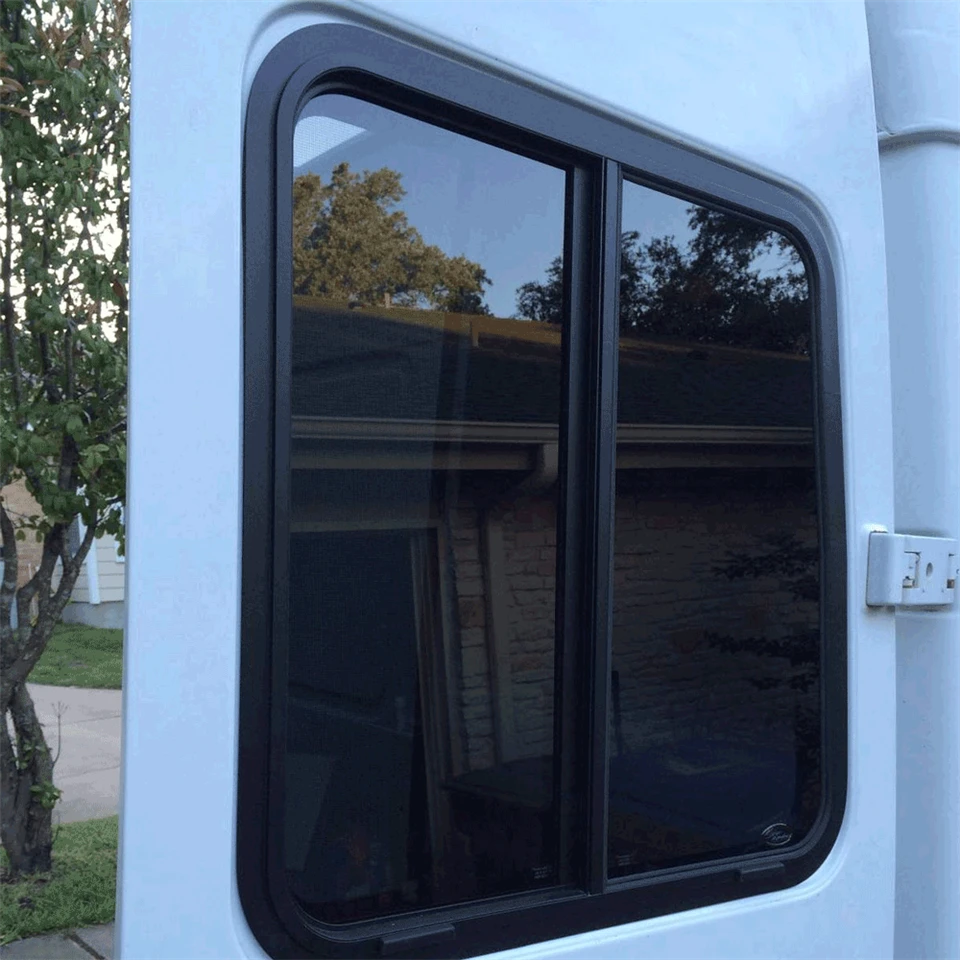
Horizontal sliding is one of the most practical configurations for RV side windows. A movable glass panel slides across the adjacent section, providing ventilation while remaining completely within the frame.
This structure is particularly suitable for side walls where outward-opening windows could interfere with awnings, campsite spaces or nearby vehicles.
Main characteristics include:
Horizontal sash movement
Compact opening within the vehicle wall
Fixed and sliding glass combination
Adjustable ventilation opening
Low exterior projection
Left- or right-oriented configurations
Optional integrated insect screen
Horizontal slider models are widely used in current RV window systems and can be configured for either side of a vehicle.

Radius-Corner RV Sliding Windows
Radius corners are commonly used on motorhomes, caravans and travel trailers because the curved frame profile integrates smoothly with vehicle body openings.
The corner radius is matched to the actual wall cutout rather than selected only from the overall width and height.
Custom radius designs are suitable for:
Motorhome side walls
Travel trailers
Camper vans
Caravans
Mobile cabins
Specialty vehicles
Accurate corner geometry is important when replacing an existing RV window because the cutout radius directly affects frame fit. Current RV replacement guidance likewise treats corner radius as a separate measurement from overall opening width and height.

Square-Corner RV Sliding Windows
Square-corner frames provide a more geometric appearance and are suitable for vehicle bodies designed around rectangular cutouts.
They can be used for:
Modern camper vans
Expedition vehicles
Box-body conversions
Mobile offices
Specialty trailers
Custom recreational vehicles
Square-corner and radius-corner versions allow the window geometry to follow the vehicle body design rather than forcing the body opening to adapt to one standard frame shape. Current RV window ranges include both configurations.

Slim RV Sliding Windows
Slim-frame RV windows reduce the visual width of the surrounding profile and create a cleaner appearance on compact vehicle side walls.
Because RV openings are usually much smaller than architectural window openings, frame proportion has a strong influence on the visible glass area.
Slim designs are suitable for:
Camper van conversions
Premium motorhomes
Compact caravans
Expedition campers
Modern recreational vehicles
The final frame section is selected according to the opening size, glass weight, wall thickness and required structural stability.

RV Sliding Windows with Insect Screens
An integrated screen allows the glass sash to remain open for ventilation while reducing insect entry.
This is particularly useful for overnight camping, warm-weather travel and vehicles that rely on natural ventilation when parked.
The screen travels within its own section of the RV window assembly and remains contained inside the compact frame structure. Fine-mesh screens are a standard feature in some current horizontal RV slider systems.

Emergency-Exit RV Sliding Windows
Selected RV window configurations can incorporate an emergency-release function where the vehicle design or applicable regulation requires an escape opening.
The emergency-release mechanism must be clearly distinguishable from the normal ventilation lock and coordinated with the required clear opening size.
Deslano can develop the window arrangement according to the customer's vehicle design and applicable market requirements.
Emergency-release horizontal slider versions are also present in current commercial RV window ranges, demonstrating that this is a distinct RV-specific configuration rather than a normal architectural-window feature.
RV Sliding Window Series Comparison
| Comparison Criteria | Horizontal Slider | Radius-Corner Slider | Square-Corner Slider | Emergency-Exit Slider |
|---|
| Main Function | Daily ventilation | Vehicle-body integration | Rectangular body opening | Ventilation + emergency release |
| Opening Method | Horizontal | Horizontal | Horizontal | Horizontal / release mechanism |
| Corner Design | Radius or square | Rounded | Square | Project-specific |
| Main Application | General RV side walls | Motorhomes and caravans | Camper conversions and specialty vehicles | Designated escape locations |
| Screen Option | Available | Available | Available | Depends on configuration |
| Main Advantage | Compact operation | Smooth integration with body cutout | Modern geometric appearance | Additional emergency function |
Points to Consider for RV Sliding Windows
Compact Vehicle-Wall Construction
RV windows are installed into thinner wall assemblies than conventional residential windows.
Instead of using a deep architectural frame, the window assembly is designed around the vehicle wall cutout and interior finishing thickness.
A typical installation relationship includes:
Exterior window frame
Vehicle wall opening
Interior trim or clamp ring
Perimeter sealing interface
Interior wall finish
The exterior frame and interior trim ring work together to secure the window around the wall opening.
This structure allows the same visible exterior window design to be adapted to different vehicle-wall constructions by adjusting the installation interface rather than increasing the exterior frame size.
Current RV window installation systems similarly use trim rings and require wall thickness to be confirmed during product selection.
Rough Opening Fit
The most important dimension for an RV sliding window is the vehicle wall cutout, also called the rough opening.
The window cannot be selected only from the visible glass dimensions or exterior frame dimensions.
For custom production, the following dimensions should be confirmed:
Rough opening width
Rough opening height
Corner radius
Vehicle wall thickness
Exterior frame coverage
Interior trim-ring dimensions
This is particularly important for replacement windows because two products with similar exterior dimensions may require different wall openings.
Current RV window installation guidance also specifies measuring the rough opening at multiple points and separately confirming wall thickness and window style.
Radius Corner Geometry
Rounded corners are one of the most recognizable structural characteristics of RV windows.
Unlike ordinary building windows, where square corners dominate, RV body openings often use radiused corners to create a smoother transition through the wall panel.
The required radius should be confirmed directly from:
Vehicle drawings
Existing window samples
Body cutout templates
CAD files
Physical corner measurements
Different RV manufacturers may use different radii, so the corner shape should not be assumed from the nominal window size.
RV replacement-window guidance specifically recommends measuring the corner radius separately because multiple radius sizes are used in the market.
Lightweight Aluminum Frame
Aluminum is well suited to RV sliding window frames because it provides structural rigidity without requiring excessively bulky sections.
For a mobile vehicle, reducing unnecessary component weight is important while maintaining stable support for the glass and sliding sash.
The frame can be finished in:
Black powder coating
White powder coating
Anodized finish
Customized architectural colors
Black frames are particularly common on modern RVs because they visually integrate with tinted glass and vehicle exterior trim.
Corrosion-resistant aluminum frames are also used in current commercial RV window systems intended for long-term exterior exposure.
Travel-Ready Frame Stability
An RV window operates in a different environment from a stationary building window.
During vehicle use, the assembly is exposed to repeated movement, road vibration and body flex. The window frame therefore needs stable corner connections, correctly supported glazing and controlled sash clearance.
The sliding panel should remain secure when the vehicle is:
Driving on highways
Traveling over uneven roads
Turning or braking
Parked on uneven ground
Exposed to changing temperatures
Latch position, sash overlap and frame alignment are coordinated so the movable panel remains contained within the frame during travel.
Commercial RV window manufacturers likewise design their window systems specifically around the movement and environmental exposure associated with road use.
Tinted Glass for RV Interiors
Tinted glazing is particularly suitable for recreational vehicles because the window is often positioned close to beds, seating areas and compact living spaces.
The darker glass can reduce visual exposure from outside while maintaining daylight and exterior visibility from the interior.
Tinted glass also helps create a consistent exterior appearance across:
Side windows
Rear windows
Cab windows
Entry-door glazing
Available tint levels and colors can be matched to the vehicle design.
Tempered tinted glass is commonly used in current RV window products for safety, privacy and solar-control purposes.
Tempered Safety Glass
RV windows can be produced with tempered safety glass to improve resistance to normal vehicle use and thermal stress.
The glass thickness and tint are selected according to the window size, frame design and target market.
For specialized projects, other glazing configurations can be evaluated according to customer requirements.
General glazing options and glass-performance explanations will be covered on the main Sliding Windows category page.
Integrated Ventilation for Compact Interiors
RV interiors have limited floor area, so even a relatively small opening can provide useful natural ventilation.
The sliding sash can be partially or fully opened while remaining within the body line of the vehicle.
This allows fresh air to enter spaces such as:
Sleeping areas
Dining areas
Kitchens
Rear lounges
Bunk areas
Campervan cabins
The opening can be adjusted according to weather conditions without requiring exterior clearance.
Low-Projection Exterior Design
The sash does not swing outward from the RV body.
This makes horizontal sliding windows useful where the vehicle is parked close to:
Another RV
Campsite furniture
Trees
Awning supports
Storage structures
Narrow parking spaces
The closed and open window remains substantially within the original frame plane, helping maintain a compact vehicle envelope.
RV Sliding Window Applications
Motorhomes
RV sliding windows can be installed along living-room, sleeping and dining areas where compact ventilation is required.
Radius corners and dark tinted glass can be coordinated with the exterior styling of the motorhome.
Camper Vans
Camper van conversions often have limited wall area and shallow interior construction.
Compact horizontal sliders provide ventilation while maintaining a relatively low-profile exterior appearance.
Travel Trailers
Travel trailers can use standardized sliding windows across bedrooms, kitchens, dining spaces and lounges.
Window sizes and corner geometry can be coordinated with the trailer body's panel layout.
Caravans
Radius-frame sliding windows suit traditional and modern caravan bodies where controlled ventilation and compact operation are required.
Expedition Vehicles
Custom square- or radius-corner windows can be developed for expedition campers and overland vehicles with non-standard wall thicknesses and opening dimensions.
Mobile Offices
Specialty vehicles used as offices, command units or mobile workspaces can use sliding windows to provide daylight and ventilation without projecting from the body.
Food and Service Trailers
Compact sliders can be used as auxiliary ventilation windows in mobile commercial vehicles where space around the exterior wall is restricted.
RV Replacement Projects
Custom RV sliding windows can be produced according to an existing wall cutout when replacement parts are unavailable or the original window specification has changed.
RV Sliding Window Technical Specifications
| Item | Available Configuration |
| Product Name | RV Sliding Window |
| Opening Method | Horizontal sliding |
| Main Application | RV, motorhome, camper van, caravan and travel trailer |
| Frame Material | Aluminum alloy |
| Corner Design | Radius corner or square corner |
| Sash Arrangement | Sliding + fixed glass |
| Opening Orientation | Left or right according to configuration |
| Glass | Clear, tinted or tempered safety glass |
| Screen | Integrated sliding insect screen available |
| Emergency Exit | Optional project-specific configuration |
| Exterior Finish | Powder coated or customized finish |
| Common Color | Black, white or customized |
| Installation Interface | Exterior frame + interior trim/clamp ring |
| Wall Compatibility | Customized according to vehicle-wall thickness |
| Size | Manufactured according to rough-opening dimensions |
| Replacement Supply | Custom sizes available based on existing cutout information |
Final specifications depend on vehicle design, window dimensions and applicable target-market requirements
RV Configuration and Interior Décor
RV Window Cutout Configurations
Radius Opening
Designed for wall openings with rounded corners.
The radius must match the vehicle cutout to achieve proper perimeter coverage and installation alignment.
Square Opening
Designed for rectangular body openings used on camper conversions and specialty vehicles.
Horizontal Wide Opening
A low, wide proportion is suitable for side walls above beds, dinettes and seating areas.
Compact Narrow Opening
Small sliding windows can provide ventilation in bunk areas, bathrooms, rear sleeping spaces and utility zones.
Custom Body Opening
Non-standard RV bodies can use project-specific frame dimensions and corner geometry based on CAD or physical measurements.
Interior Trim Ring Design
The interior trim ring finishes the inside edge of the vehicle wall and helps coordinate the window with different wall thicknesses.
Its dimensions are selected according to:
Wall thickness
Interior panel depth
Window frame geometry
Installation clearance
The trim ring also provides a cleaner interior appearance by covering the cut edge of the vehicle wall.
Current RV replacement systems commonly use an interior trim ring as part of the installation assembly.

Why Choose Deslano RV Sliding Windows

RV-Specific Window Geometry
Frames can be developed around vehicle cutouts rather than standard residential window modules.
Radius and Square Corner Options
Different body designs can be matched with rounded or rectangular frame geometry.
Thin-Wall Installation
The frame and interior trim arrangement can be coordinated with RV wall thickness.
Compact Horizontal Operation
The movable sash remains within the vehicle body line and requires no outward swing clearance.
Custom Replacement Capability
Non-standard openings can be evaluated using rough-opening measurements, radius information and existing-window samples.
Tinted Glass Options
Glass appearance can be coordinated with vehicle privacy and exterior styling requirements.
Integrated Screen Configuration
Ventilation and insect protection can be combined within the compact RV window assembly.
OEM Project Supply
Custom dimensions, frame finishes, glass tint and identification requirements can be developed for RV manufacturers, conversion companies and distributors.
FAQ
Q: What dimensions are required for a custom RV sliding window?
A: The most important dimensions are the rough opening width and height, corner radius and vehicle wall thickness. The visible glass size alone is not sufficient for manufacturing.
Q: Can RV sliding windows be made with rounded corners?
A: Yes. Radius-corner frames can be customized according to the vehicle wall opening.
Q: Can you produce square-corner RV windows?
A: Yes. Square-corner configurations are available for rectangular body openings.
Q: Can the sliding direction be customized?
A: Yes. The required opening orientation can be confirmed according to the installation location and vehicle layout.
Q: Can RV sliding windows include insect screens?
A: Yes. Integrated sliding screens can be incorporated into compatible frame configurations.
Q: Is tinted glass available?
A: Yes. Different tint levels and glass appearances can be selected according to the vehicle design.
Q: Can tempered glass be used?
A: Yes. Tempered safety glass is suitable for RV window applications and can be combined with tinted finishes.
Q: Can you manufacture replacement RV windows?
A: Yes. Custom replacement windows can be evaluated according to the existing rough opening, wall thickness, corner radius and old-window information.
Q: Is the corner radius important?
A: Yes. The radius must correspond to the vehicle cutout. An incorrect radius can prevent proper frame fit even when the overall width and height are correct.
Q: Can the trim ring be customized for different wall thicknesses?
A: Yes. The interior trim interface can be developed according to the wall construction and selected window frame.
Q: Are emergency-exit versions available?
A: Emergency-release configurations can be developed where required, subject to the target-market standard and project design.
Q: Are RV sliding windows suitable for camper van conversions?
A: Yes. Compact sliding operation, custom dimensions and square- or radius-corner designs make them suitable for camper conversions.
Q: Can the frame color be customized?
A: Yes. Black, white and other project-specific finishes can be produced according to the selected system.
Q: What information is needed for a replacement window?
A: Provide the rough opening dimensions, wall thickness, corner radius, existing window photographs and installation position.

Request a Quote for Custom RV Sliding Windows
Deslano manufactures custom RV sliding windows for motorhomes, camper vans, travel trailers, caravans and specialty vehicles.Provide the rough opening size, corner radius, wall thickness, required sliding direction, glass tint and quantity to receive a project-specific window configuration and quotation.For replacement projects, existing-window photos or drawings can also be reviewed.
Hot Tags: rv sliding window, China rv sliding window manufacturers, suppliers, factory