

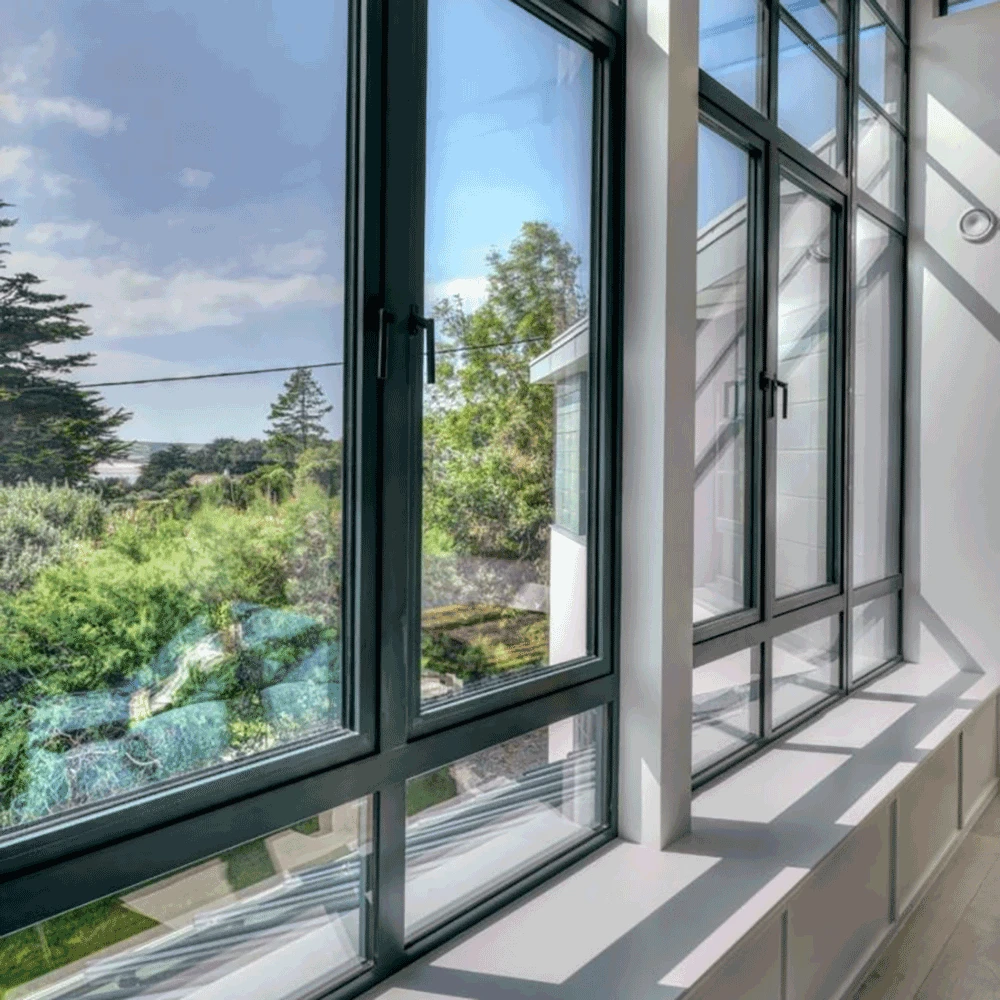
Double Casement Windows
Deslano double casement windows pair two outward-swinging sashes, hinged on opposite outer jambs, meeting in the center with no fixed mullion between them. When both sashes are open, the opening is unobstructed across its full width - something a single casement or a center-mullioned pair of casements can't offer.
That mullion-free center is also the main engineering difference from other casement configurations: without a center post to seal against, the two sashes have to seal against each other, and only one of them can be the "master" that locks the pair closed. That changes the hardware, the size limits, and the screening approach compared to a standard single casement - which is why double casement is treated as its own product line rather than "two casements side by side."
Frame material, sash size, hardware side (active/inactive), and glazing are configured per project requirement.
What Makes This Product Different (Engineering Detail)
Active and Inactive Sash Hardware
Because there's no center mullion for both sashes to lock into independently, one sash is designated the inactive sash - it closes first and locks to the frame with flush bolts or a shootbolt at the top and bottom. The active sash then closes over it and its handle engages a keeper strip mounted on the inactive sash's meeting stile, locking both sashes together as one unit. This close-first/close-second sequence is specific to mullion-free pairs - it doesn't exist on a single casement or on casements separated by a fixed mullion, where each sash locks independently to the frame.
01
Center Meeting Seal Without a Mullion
A mulled pair of casements seals each sash against a solid center post. A double casement instead relies on an interlocking weatherstrip or astragal profile built into the meeting stiles of the two sashes themselves, compressed together when the active sash locks over the inactive one. This is a smaller sealing surface than a full mullion provides, which is part of why combined sash width is capped lower than you'd get by simply doubling a single-casement's maximum width.
02
Wind Load Without Center Support
A center mullion also normally acts as a structural post, resisting wind load across the middle of a wide opening. A mullion-free double casement doesn't have that support, so the full wind and racking load transfers to the two outer jambs and the meeting-stile hardware instead. This is why double casement openings have a lower maximum combined width/height than a single casement of similar frame system - and why wider or taller openings may need reinforced jambs, heavier-duty meeting-stile hardware, or a switch to a mulled (fixed center post) pair if the size exceeds the mullion-free structural limit.
03
Screening an Outward-Opening Center Pair
Both sashes swing outward, away from each other, which means a standard exterior-mounted screen (as used on a single casement) would sit in the swing path of the opposite sash. Double casement units are typically screened with an interior-mounted screen behind both sashes, or with screens built into the sash frames themselves - the screening approach has to be decided as part of the configuration, not defaulted the way it can be on a single casement.
04
Ventilation Geometry
With both sashes open, each one acts as an angled scoop catching airflow from a different direction - one sash can pull air in while the other channels it out, which creates cross-ventilation across a room even with only one wind direction outside. This is a specific advantage over a single casement of the same total width, which only scoops from one direction.
05
Configurations
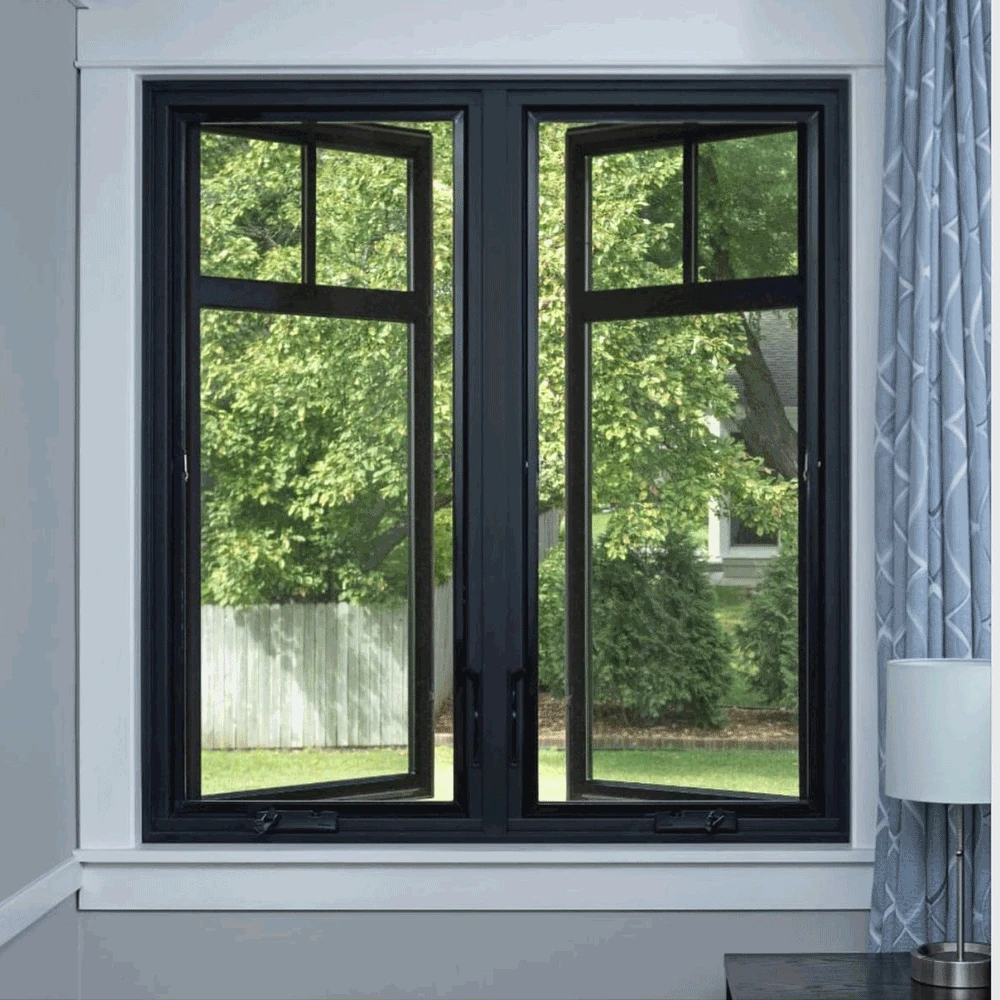
Standard Double Casement
Two mirror-image sashes, hinged on opposite outer jambs, meeting at a mullion-free center with active/inactive sash hardware. The base configuration - sized within the mullion-free structural limit for the selected frame system.
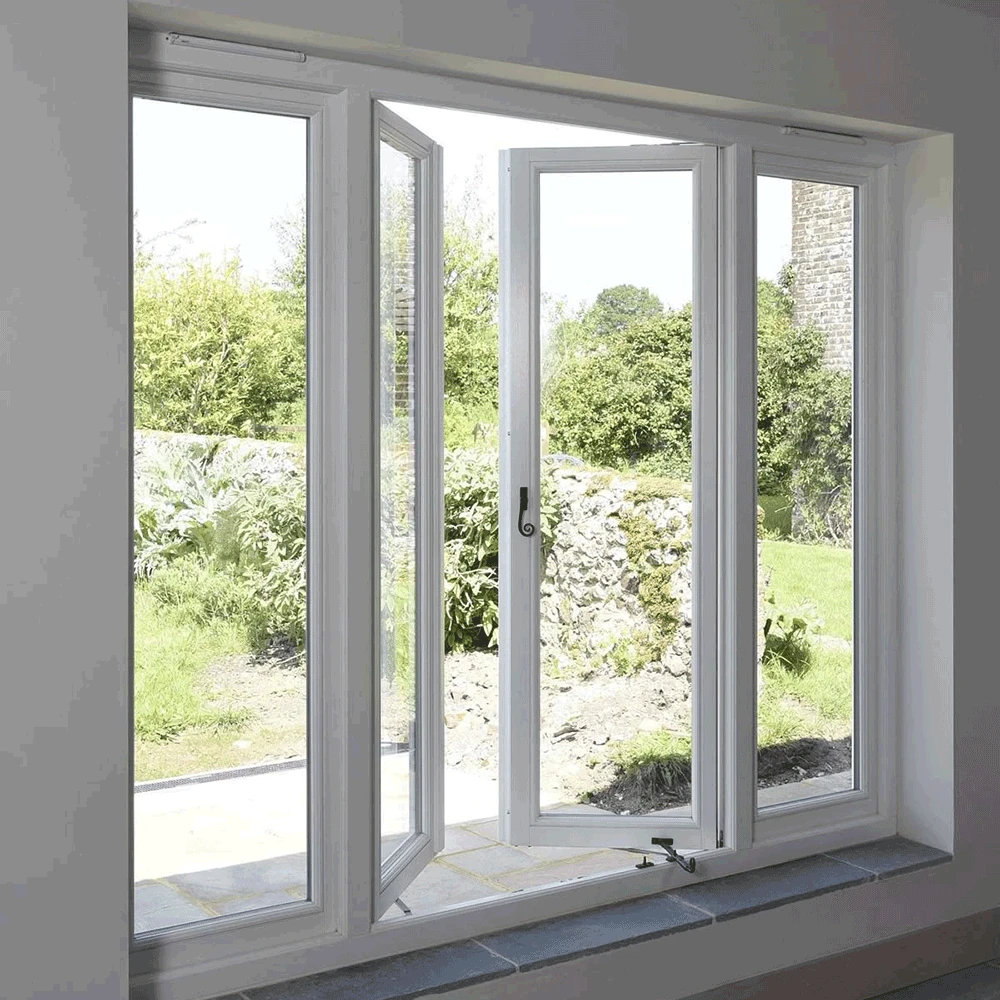
Double Casement with Fixed Sidelights
The operable pair flanked by fixed glazing on one or both sides. Used when the full façade width needs more glass area than the mullion-free double-casement size limit allows for the operable section alone.
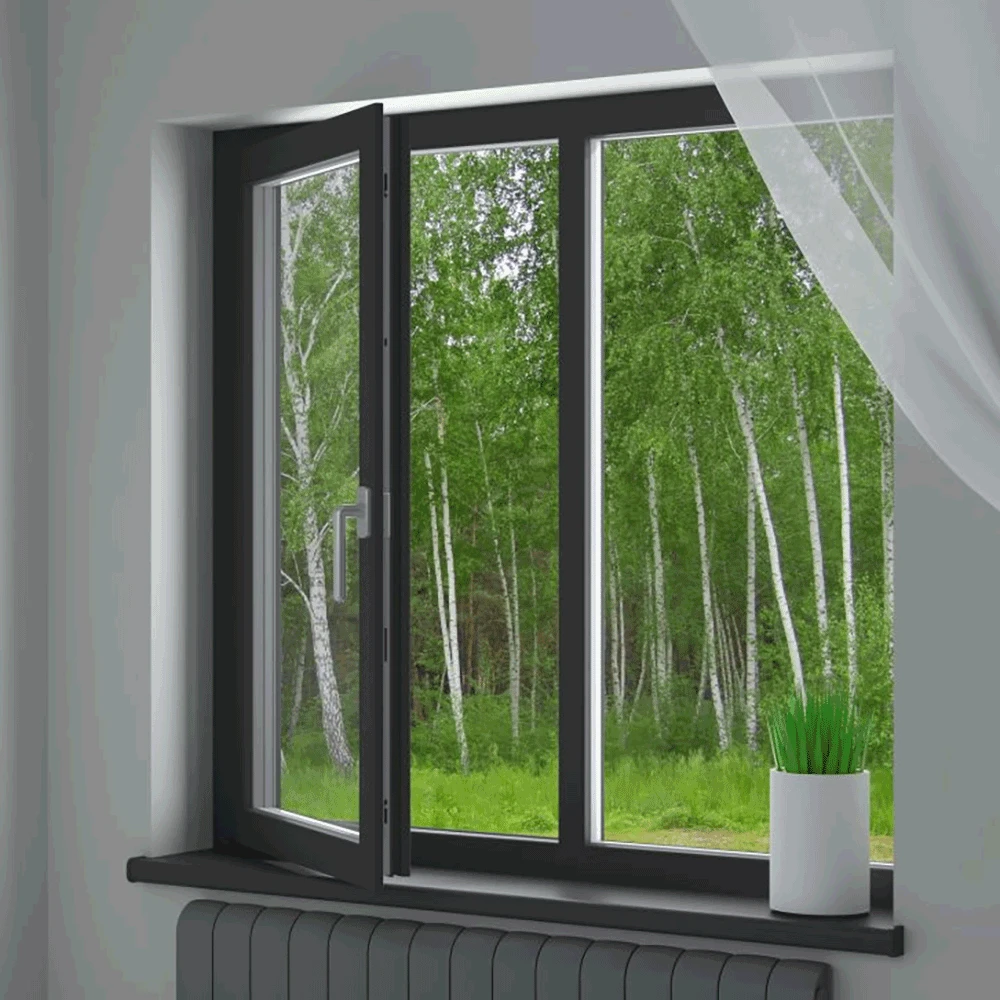
Wide-Opening Double Casement with Reinforced Jambs
For openings at or near the mullion-free structural limit, reinforced jambs and heavier meeting-stile hardware extend the maximum size. Beyond that limit, a fixed center mullion is introduced and the unit becomes two independently-locking casements rather than a true mullion-free pair - this crossover point is confirmed per frame system before finalizing drawings.
Double Casement in Bay and Bow Assemblies
A mullion-free pair is sometimes used as the center unit in a bay and bow window assembly instead of a single fixed picture window, giving venting capability at the center of the assembly rather than only at the angled sides. Treated as its own structural scope alongside the rest of the bay/bow engineering.
Technical Specifications
| Specification | Available Configuration |
|---|---|
| Opening Mode | Both sashes outward-swing, hinged on opposite outer jambs |
| Center Condition | Mullion-free, interlocking meeting stiles |
| Hardware | Active sash (handle + keeper strip) / inactive sash (flush bolts or shootbolt) |
| Frame Material | Vinyl (uPVC), aluminum, or wood-clad |
| Reinforcement | Steel or fiberglass insert available in jambs for wide-opening configurations |
| Sealing Method | Perimeter compression gasket + interlocking center weatherstrip |
| Glass | Double or triple insulated glazing |
| Safety Glass | Tempered or laminated available |
| Low-E / Argon Fill | Available |
| Screen | Interior-mounted full-width screen, or sash-integrated screens |
| Size | Custom, subject to mullion-free structural limit for the selected frame system |
Material-specific frame details (chamber count for vinyl, thermal-break structure for aluminum) are covered on the dedicated Casement Windows pages
Double Casement vs. Single Wide Casement vs. Mulled Casement Pair
Use this to decide early: if the opening is wide enough to approach the mullion-free structural limit, a mulled pair may be the more practical spec than pushing a double casement to its maximum.
| Double Casement (mullion-free) | Single Wide Casement | Mulled Casement Pair (fixed center post) | |
| Center obstruction when open | None | N/A (one sash) | Fixed mullion always present |
| Hardware | Active/inactive sequence | Single independent lock | Each sash locks independently |
| Max combined width | Limited by meeting-stile structural capacity | Limited by single sash weight/hinge capacity | Highest - center post shares the load |
| Best for | Unobstructed full-width ventilation view | Narrower openings, simplest hardware | Wide openings where a center post is acceptable |
Where It's Typically Used

Kitchens over sinks and counters - the unobstructed center opening avoids a mullion or track sitting directly over the workspace.
Bay and bow window centers - used in place of a fixed picture window when venting at the center of the assembly is wanted.
Rooms needing cross-ventilation - the opposite-direction outward swing scoops air from two angles rather than one.
Renovation of older French-casement-style openings - a common like-for-like replacement where the original had no visible center post.
Customization
| You choose | We configure around |
|---|---|
| Frame material (vinyl / aluminum / wood-clad) | Thermal performance, finish, maintenance requirement |
| Combined sash width/height | Mullion-free structural limit vs. reinforced-jamb option |
| UScreen approach (interior full-width / sash-integrated) | Interior layout, insect-screen visibility preference |
| Fixed sidelights | Total façade glass area vs. operable width |
| Glazing (double/triple, Low-E, gas fill) | Climate zone, acoustic requirement |
| Egress sizing on active sash | Local building code minimums |
Provide window dimensions, quantity, frame material preference, sidelight requirement, and project location for a project-specific quotation
FAQ
Q: Is a double casement the same as a double-hung window?
A: No. Double-hung refers to two vertically sliding sashes in one frame. Double casement refers to two side-hinged, outward-swinging sashes meeting at a mullion-free center - a completely different opening mechanism.
Q: Which sash opens first?
A: The inactive sash closes first and locks to the frame independently; the active sash then closes over it and its handle locks both together. When opening, the active sash is released first.
Q: Can I get any width I want without a center post?
A: No - mullion-free construction has a structural size limit specific to the frame system and hardware, since the two outer jambs and the meeting-stile hardware carry the full wind load without a center post to help. Beyond that limit, a mulled pair with a fixed center post is the more practical spec.
Q: How does screening work if both sashes swing outward?
A: Most double casement units use an interior-mounted screen behind both sashes, or screens built into each sash frame, since a standard exterior screen would sit in the opposite sash's swing path.
Q: Does a double casement meet egress code the same way a single casement does?
A: Usually only the active sash needs to open independently to satisfy minimum clear-opening code, but treatment varies by jurisdiction - confirm against local egress requirements before finalizing bedroom-level dimensions.
Q: What information do you need for a quote?
A: Dimensions, quantity, frame material preference, sidelight requirement (if any), screen approach, and project location.

Request a Quote for Custom Single Hung Windows
Send us your window dimensions, quantity, frame material preference, sidelight requirement, screen approach and project location for a project-specific configuration and quotation.Contact Deslano for custom double casement window manufacturing and project supply.
Hot Tags: double casement windows, China double casement windows manufacturers, suppliers, factory