


Hey there! If you're into video processing or just curious about how to make your video - related tasks more efficient, you've come to the right place. I'm from a sliding window supplier, and today, I'm gonna share with you how to use the sliding window for video processing.
What is a Sliding Window in Video Processing?
First things first, let's get on the same page about what a sliding window is. In video processing, a sliding window is like a little moving frame that scans across a video frame or a sequence of frames. It's a small, rectangular area that slides over the entire video data, pixel by pixel or block by block.
Think of it as a magnifying glass that you move around a picture. As it moves, it focuses on different parts of the image or video, allowing you to perform various operations on those specific areas. This technique is super useful because it helps you analyze and process large amounts of video data in a more manageable way.
Why Use a Sliding Window?
There are several reasons why using a sliding window in video processing is a great idea.
Local Feature Extraction
One of the main benefits is local feature extraction. Videos are full of details, and sometimes, you're only interested in specific features within a small area. For example, if you're trying to detect a face in a video, you can use a sliding window to search for facial features like eyes, nose, and mouth. By moving the window across the frame, you can check each small area for these features.
Object Detection
Sliding windows are also crucial for object detection. You can define a window size that's appropriate for the object you're trying to detect. For instance, if you're looking for cars in a traffic video, you can set the window size to match the average size of a car. Then, as the window slides across the frame, it can analyze the content within it to determine if there's a car present.
Motion Analysis
When it comes to motion analysis, sliding windows can help you track the movement of objects. You can compare the content of the window in consecutive frames to see how objects are moving. This is useful in applications like sports analysis, where you might want to track the movement of players or the ball.
How to Implement a Sliding Window for Video Processing
Step 1: Define the Window Size and Stride
The first step in implementing a sliding window is to define the window size and stride. The window size determines the dimensions of the rectangular area that will slide across the video frame. You need to choose a size that's appropriate for your specific task. For example, if you're doing high - resolution video processing, you might want a larger window size to capture more details.
The stride is the number of pixels or blocks that the window moves each time it slides. A smaller stride will result in more overlapping windows, which can provide more detailed analysis but will also increase the processing time. On the other hand, a larger stride will cover the frame more quickly but might miss some details.
Step 2: Initialize the Window
Once you've defined the window size and stride, you need to initialize the window at the starting position. Usually, the starting position is the top - left corner of the video frame.
Step 3: Slide the Window
Now comes the fun part - sliding the window. You start at the initial position and move the window across the frame according to the defined stride. You keep doing this until the window has covered the entire frame.
Here's a simple Python code example to illustrate how to slide a window across a video frame:
import cv2

# Load the video
cap = cv2.VideoCapture('your_video.mp4')

# Read the first frame
ret, frame = cap.read()

# Define the window size and stride
window_size = (100, 100)
stride = 20

# Get the height and width of the frame
height, width, _ = frame.shape

# Slide the window
for y in range(0, height - window_size[1], stride):
    for x in range(0, width - window_size[0], stride):
        # Extract the window
        window = frame[y:y + window_size[1], x:x + window_size[0]]

        # Here you can perform your analysis on the window
        # For example, you can display the window
        cv2.imshow('Window', window)
        cv2.waitKey(1)


cap.release()
cv2.destroyAllWindows()
In this code, we first load a video and read the first frame. Then we define the window size and stride. We use nested loops to slide the window across the frame, extracting each window and performing some analysis (in this case, displaying the window).
Advanced Techniques with Sliding Windows
Multi - Scale Sliding Windows
Sometimes, the objects you're trying to detect in a video can vary in size. In such cases, using a single window size might not be enough. That's where multi - scale sliding windows come in. You can use different window sizes to cover a wider range of object sizes. For example, you can start with a small window size to detect small objects and then gradually increase the size to detect larger ones.
Adaptive Window Sizes
Another advanced technique is using adaptive window sizes. Instead of using a fixed window size, you can adjust the size of the window based on the content of the video. For example, if you notice that an object is getting larger in consecutive frames, you can increase the window size to better capture it.
Our Sliding Window Products
As a sliding window supplier, we offer a wide range of sliding window solutions for video processing. Whether you're working on a small - scale project or a large - scale industrial application, we've got you covered.
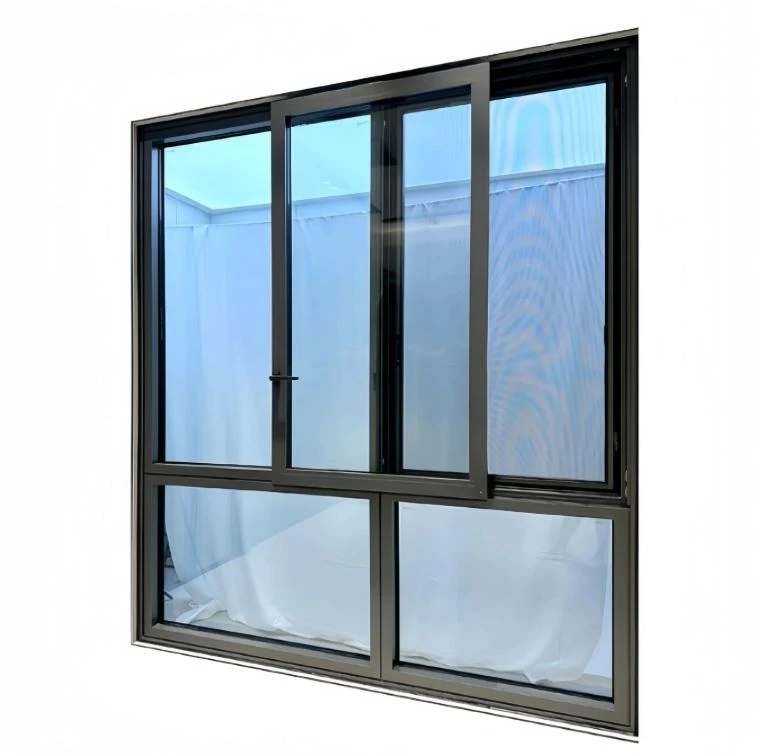
We have Sliding Sash Window which are designed to provide smooth and precise movement. These windows are perfect for applications where you need to accurately extract local features or detect objects.
Our Double Pane Sliding Window offer enhanced performance and durability. They are great for long - term video processing projects where reliability is key.
If you're dealing with challenging environments, our Horizontal Sliding Storm Windows are a great choice. They can withstand harsh conditions and still provide high - quality video processing results.
Contact Us for Procurement
If you're interested in our sliding window products for your video processing needs, we'd love to hear from you. Whether you have questions about our products, need help with implementation, or want to discuss a custom solution, don't hesitate to reach out. We're here to assist you in making the most of sliding windows for your video processing projects.
References
- Smith, J. (2018). Video Processing Basics. Publisher X.
- Johnson, A. (2020). Advanced Sliding Window Techniques in Computer Vision. Journal of Visual Computing.