



Choosing a reliable window and door manufacturer in China requires verifying three core factors immediately: production capacity (e.g., >5,000 sqm/month), authentic certifications (CE/ISO 9001), and material traceability. While many suppliers look similar on paper, a true partner controls risk through transparent QC systems and consistent engineering standards rather than just low prices. This guide breaks down exactly how to audit these signals effectively.
How Do You Verify Real Production Capacity vs. Trading Companies?
A polished catalog can be misleading. To distinguish a real factory from a trader, you must verify specific production metrics. A reliable manufacturer should clearly demonstrate:
Monthly Output: Look for factories with at least 5,000–10,000 m² monthly capacity for stable project delivery.
Machine Scale: Check for brands like YKK AP or Elumatec processing equipment, which indicates precision cutting capabilities.
Traceability: Ask if every frame has a unique QR code or laser ID linking it to the specific batch of aluminum profiles used.
If they cannot provide a live video tour of the assembly line or specific machine models, that is a major risk signal.
👉 [See Our Production Facility & Capacity →]
What Certifications Actually Matter for Export Quality?
Certifications are often overused in marketing. In real procurement, validity matters more than the logo. Reliable China window and door manufacturers usually hold:
CE Marking: Specifically compliant with EN 14351-1 for external windows and doors.
ISO 9001: Verifying their quality management system is active, not expired.
NFRC or Energy Star: Crucial if you are exporting to the North American market.
The Key Test: Ask, "Can you show me the latest test report for this specific profile series?" A strong manufacturer will produce a lab report dated within the last 12 months, not a generic certificate from five years ago.
Honor and qualification
Official certification, professional after sales service.
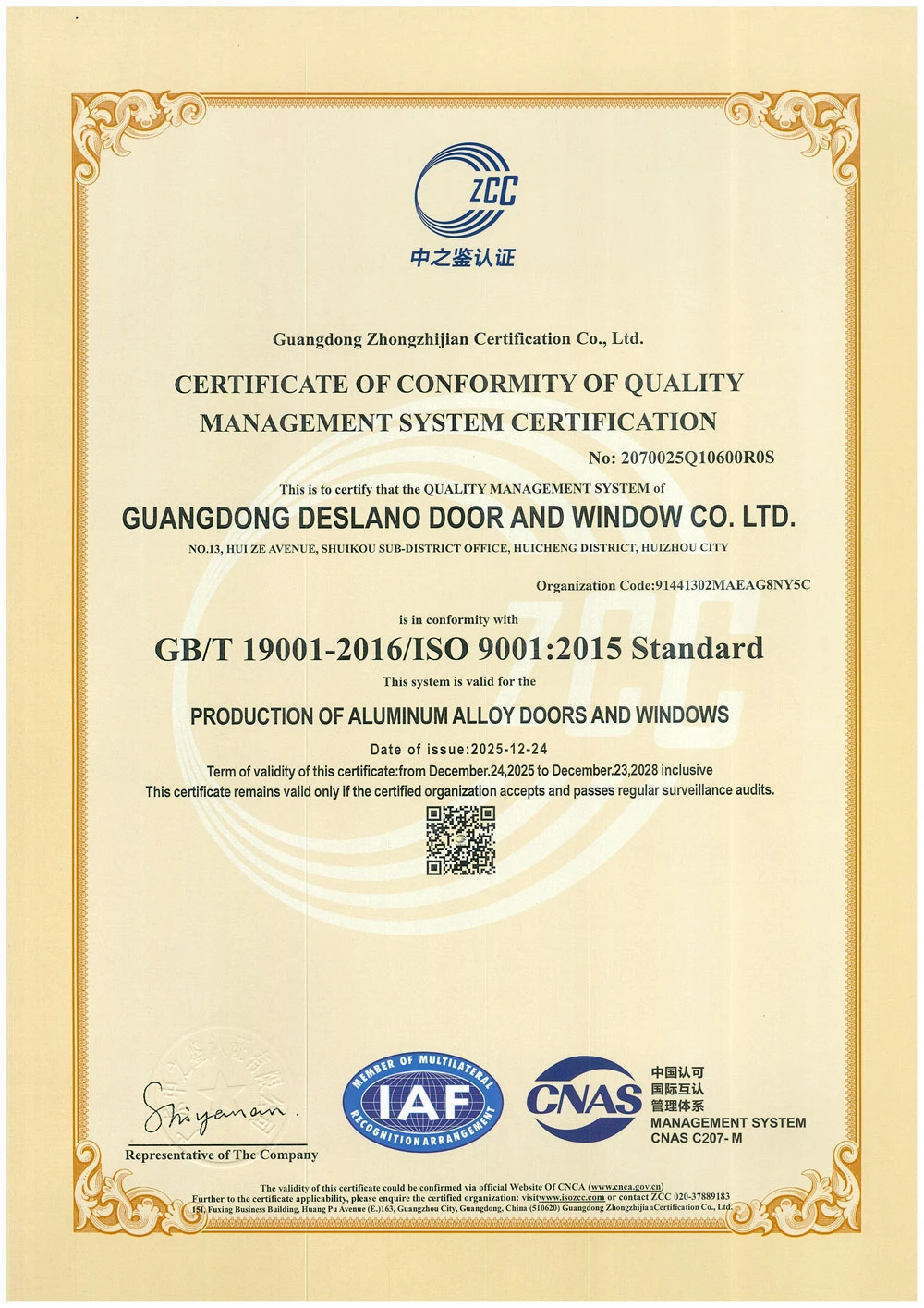
ISO
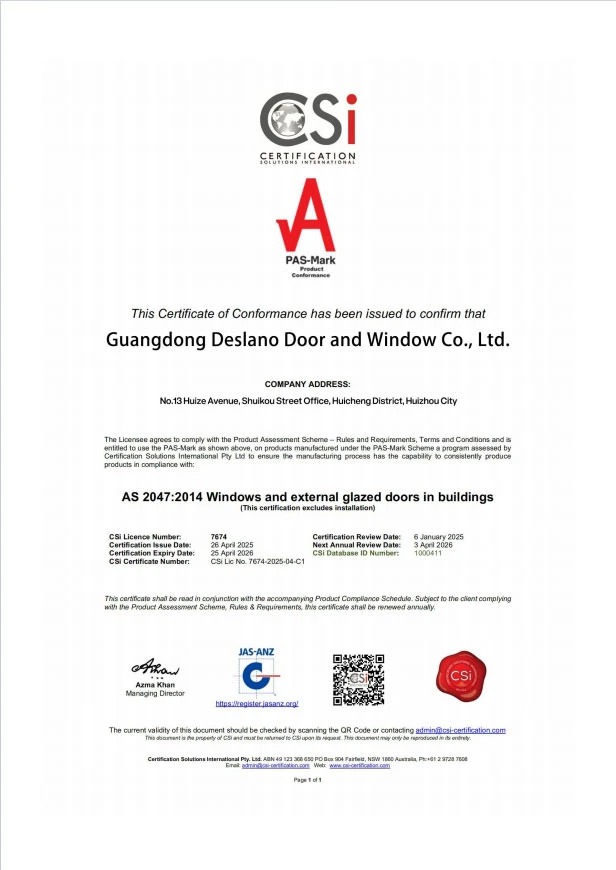
CSI
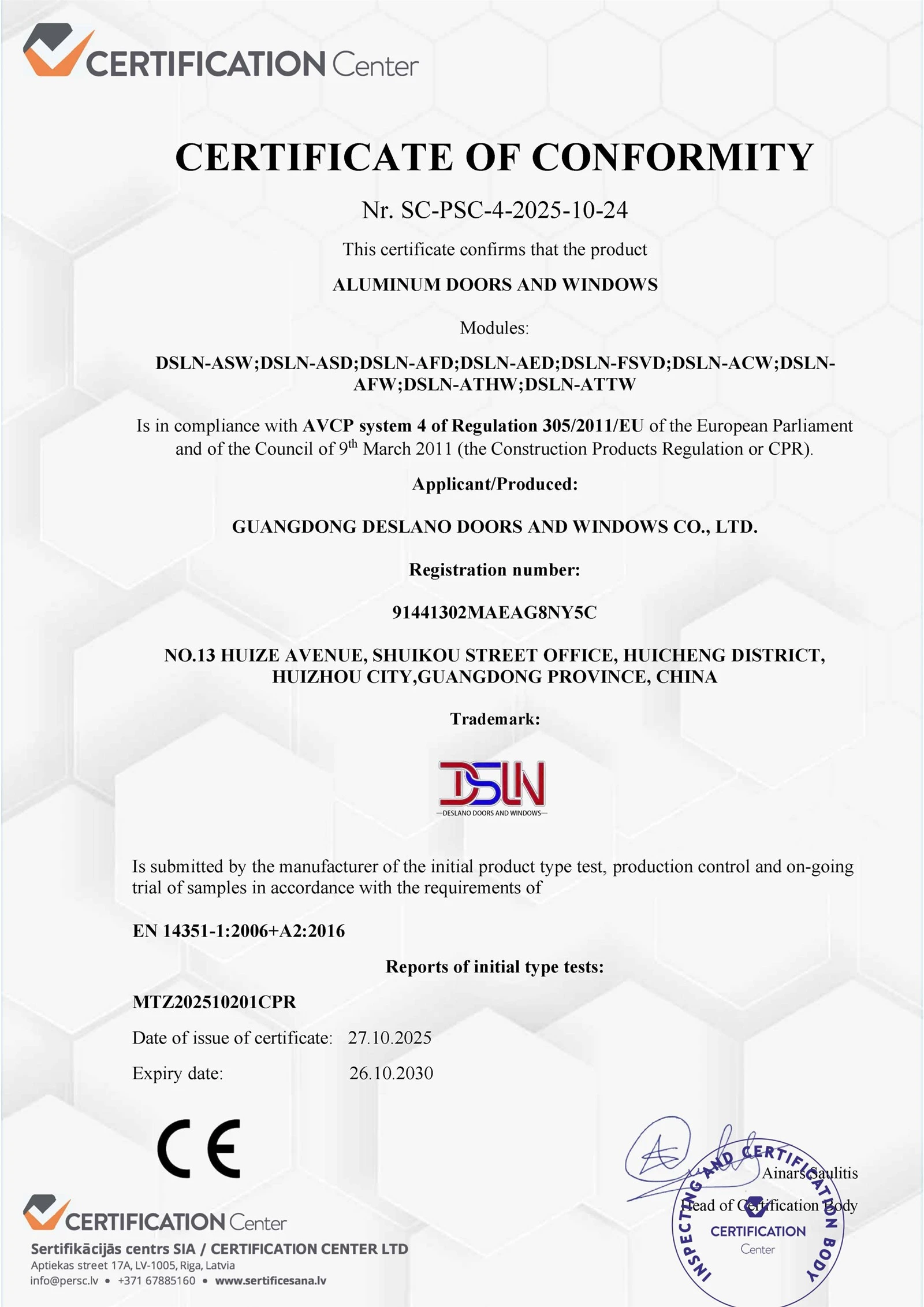
CE
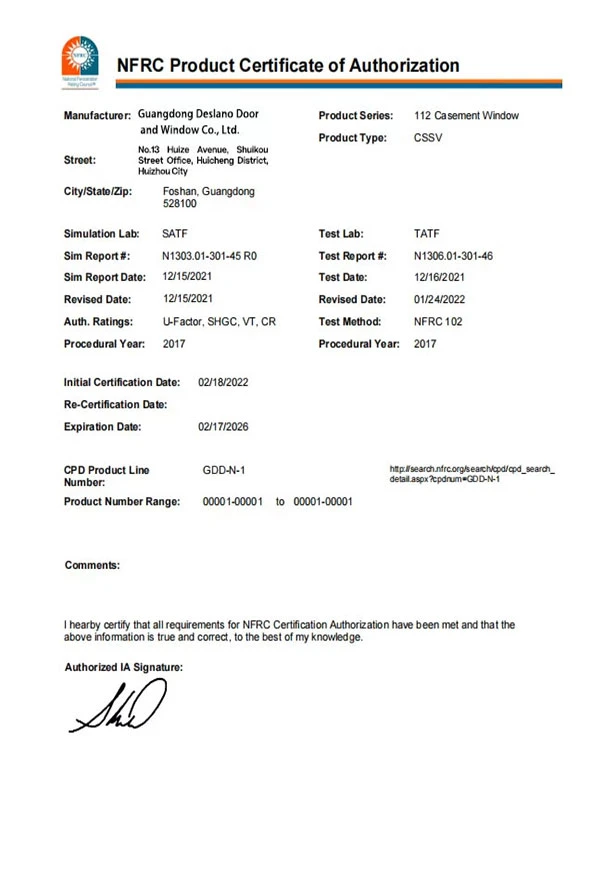
NFRC
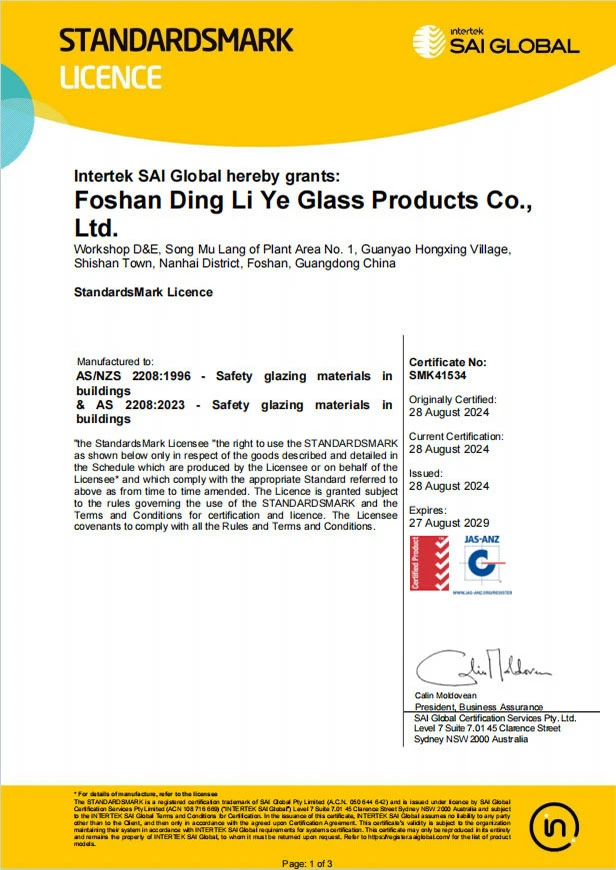
SLI
How Can You Check Material Consistency Before Ordering?
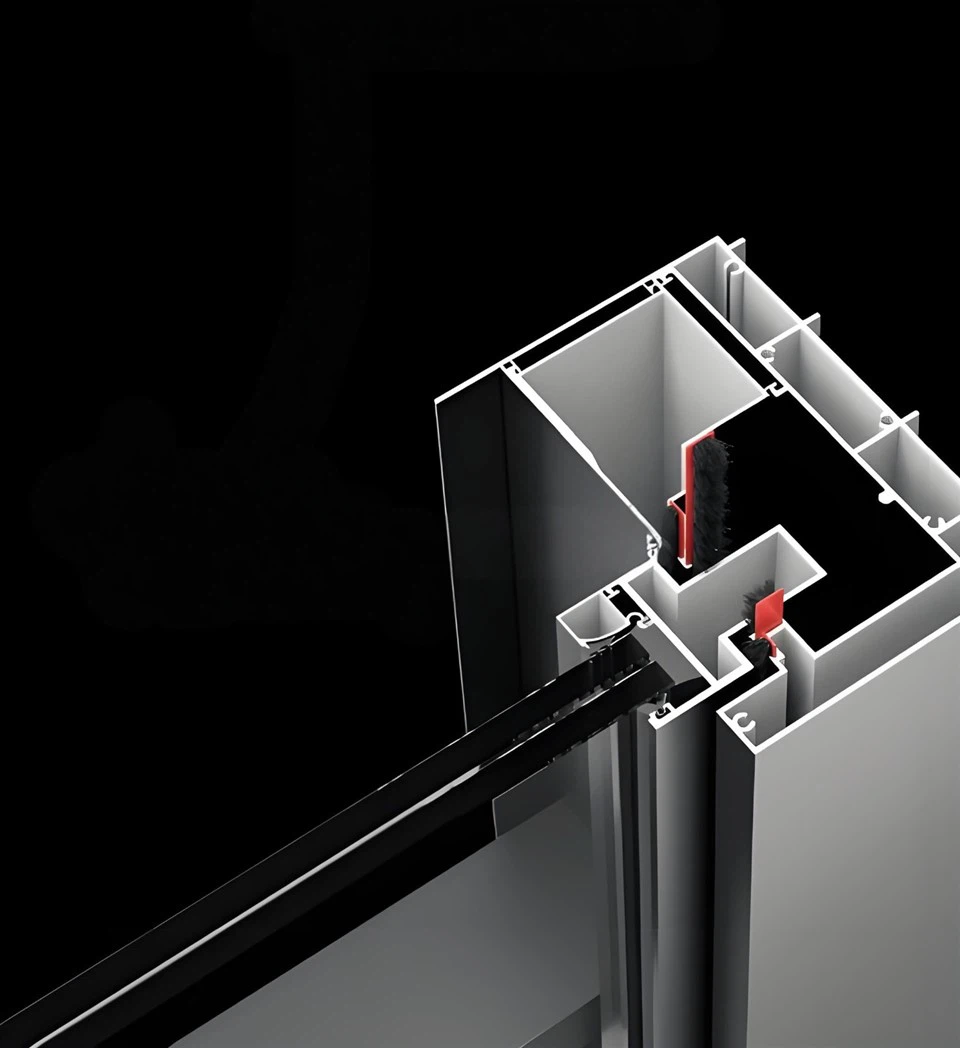
Material consistency determines longevity. Two suppliers may both claim "aluminum frame + double glazing," but performance gaps are huge. You should specify:
Aluminum Grade: Ensure primary aluminum 6063-T5 or T6 is used, with a wall thickness of ≥1.8mm for structural integrity.
Thermal Break: Verify the polyamide strip brand (e.g., Technoform) to prevent heat transfer.
Glass Sealing: Double-check if the spacer is warm-edge (TPS) and if the glass unit is argon-filled for better U-values.
A good manufacturer will welcome these technical questions and provide data sheets for each component.
Does Communication Speed Reflect Internal Discipline?
Communication style mirrors operational efficiency. Slow or vague replies often signal weak internal coordination. Watch for:
Technical Accuracy: Do engineers answer technical queries, or just sales staff?
Written Confirmation: Do they send meeting minutes or specification sheets after calls?
Proactive Clarification: Do they spot potential design conflicts before production starts?
Reliable manufacturers feel "structured" in conversation. If your specs are constantly misunderstood during the quote phase, imagine the errors during mass production.
Where Can I See Real Project Case Studies?
Almost every supplier shows project photos. But valid proof requires context. You want to see:
Climate Relevance: Has the supplier delivered to coastal regions (requiring C5M corrosion resistance) or high-wind zones?
Installation Details: Look for photos of the installation interface, not just the finished product.
Long-term Feedback: Ask for references from clients who have used the system for 3+ years.
Ask directly: "What problems did you face in previous projects, and how did you solve them?" The best suppliers answer like engineers, not marketers.
👉 [View Our Global Project Portfolio →]
Why Is Customization Capability More Important Than Price?
Real projects are rarely standard. Experienced buyers prioritize customization capability over the lowest price because it prevents costly rework. A reliable manufacturer should be able to adjust:
Profile Structure: Modifying mullions or transoms to fit unique architectural openings.
Performance Targets: Upgrading glazing to meet specific U-value (<1.1 W/m²K) or acoustic requirements.
Color Matching: Providing custom powder coating (e.g., RAL or Pantone) with Qualicoat Class 1 or 2 certification.
Honesty is key: A good partner will tell you when a request is structurally unsafe, rather than saying "yes" to everything.
What Does a Robust Quality Control System Look Like?
"We have a QC team" is not enough. You need a documented system with defined checkpoints:
Incoming Inspection: Checking profile hardness and dimensions upon arrival.
In-Process Checks: Monitoring corner cleat injection and glue injection quality during assembly.
Pre-Shipment Testing: Random sampling for water tightness (e.g., 600Pa) and air permeability tests.
Think of these as airport security checkpoints. The more structured the process, the lower the risk of failure at your job site.
How Do You Analyze the True Cost Behind the Quote?
Cheap is not always bad, but unclear pricing is always a risk. When comparing quotes, ensure they include:
Hardware Brands: Are they using top-tier brands like Roto, Siegenia, or Sobinco?
Packaging Standards: Is export-grade wooden crating included to prevent transit damage?
Spare Parts: Is a 1-2% free spare parts kit included for future maintenance?
A transparent manufacturer explains why their price is higher by detailing these value-added components.
What After-Sales Support Should You Expect?
Windows and doors interact with buildings for decades. Good manufacturers provide:
Installation Manuals: Detailed PDFs or videos for local contractors.
Claim Resolution: A clear policy for handling broken glass or hardware defects (e.g., replacement parts shipped via air freight within 7 days).
Technical Training: Online sessions to train your local team on system adjustments.
Ask: "If something goes wrong after installation, what is the exact workflow?" A serious manufacturer gives you a clear process map.
How Do You Build a Long-Term Partnership?
Choosing a manufacturer is a partnership decision. Once your projects scale, your supplier becomes part of your brand reputation. Instead of asking "Who is cheapest?", ask:
"Who can maintain lead times when my order volume doubles?"
"Who understands my local building codes deeply?"
Predictability in quality and delivery is worth far more than small initial savings.
👉 [Contact Our Engineering Team for a Consultation →]
Frequently Asked Questions (FAQ)
How do I verify if a Chinese window manufacturer is real?
Don't rely on brochures. Request a live video audit of the production line, specifically checking for CNC machining centers and double-head cutting saws. Ask for their business license and cross-reference it with their export records or third-party audit reports (like SGS or TÜV). A real factory will have traceable material batches and clear workshop zoning.
What specific certifications should a reliable manufacturer hold?
Beyond basic ISO 9001, look for market-specific compliance: CE marking (EN 14351-1) for Europe, NFRC/ENERGY STAR for North America, or AS/NZS 2047 for Australia. Crucially, ask to see the test reports linked to these certificates to ensure they cover the actual product series you are buying, not just generic templates.
Is price the most important factor when sourcing windows from China?
No. Total Cost of Ownership (TCO) matters more. A lower unit price often hides risks like thin aluminum wall thickness (e.g., <1.4mm vs standard 2.0mm), inferior hardware (non-branded vs. ROTO/SIEGENIA), or poor packaging that leads to breakage. Always compare quotes based on the exact same configuration sheet.
How can I test product quality before placing a bulk order?
Request a corner sample or a full-size mock-up unit. Test it for airtightness (Class 4), watertightness, and wind load resistance. Check the thermal break strip brand (e.g., Technoform) and ensure the glass unit has a valid warm-edge spacer and desiccant filling to prevent fogging.
What is the biggest risk when sourcing windows from China?
The biggest risk is quality inconsistency between the sample and mass production. To mitigate this, define clear AQL (Acceptable Quality Limit) standards in your contract (e.g., AQL 2.5 for critical defects) and require pre-shipment inspection photos or hire a third-party inspector before final payment.