





If your project demands unique sizes, premium performance, brand differentiation, or long-term value, a custom window manufacturer is usually the better choice. If your priority is the lowest upfront cost and fast availability for standard-sized openings, a standard supplier may be sufficient.
For contractors, developers, distributors, and brand owners, the decision isn't simply about buying windows. It's about choosing the right production partner for your project's goals, timeline, and future maintenance costs.
Why Does Your Window Supplier Matter More Than You Think?
Windows account for a significant portion of a building's appearance, energy performance, and occupant comfort. But even the highest-quality window system can become a costly investment if it's supplied by the wrong partner.
The supplier you choose affects:
● Project scheduling
● Manufacturing consistency
● Product customization
● Installation efficiency
● Warranty support
● Future replacement availability
Many procurement teams initially focus on unit price. Experienced project managers, however, know that production capability and technical support often have a much greater impact on the overall project outcome.
What Is a Custom Window Manufacturer?
A custom window manufacturer designs and produces windows according to specific project requirements rather than relying solely on standard product catalogs.
Customization may include:
● Non-standard dimensions
● Specialized opening configurations
● Custom frame colors
● Thermal break systems
● Hurricane or impact-resistant glazing
● Acoustic insulation
● Hardware selection
● Project-specific performance requirements
Most custom manufacturers also provide engineering support for architects and contractors during the design phase.
What Is a Standard Window Supplier?
Standard suppliers primarily distribute pre-designed window products manufactured in fixed dimensions and configurations.
Their products are typically available in common sizes with limited customization options.
Standard suppliers usually focus on:
● Stock inventory
● Quick delivery
● Lower purchase costs
● Residential replacement markets
● Small construction projects
For projects with conventional openings, this approach can be both practical and economical.
Custom Manufacturer vs Standard Supplier: Quick Comparison
|
Feature |
Custom Window Manufacturer |
Standard Supplier |
|
Product Sizes |
Fully customized |
Standard sizes |
|
Design Flexibility |
Excellent |
Limited |
|
Lead Time |
Longer |
Shorter |
|
Initial Cost |
Higher |
Lower |
|
Technical Support |
Extensive |
Basic |
|
Project Engineering |
Yes |
Rarely |
|
OEM/ODM Services |
Available |
Usually unavailable |
|
Large Commercial Projects |
Excellent |
Limited |
|
Best For |
Commercial & custom projects |
Standard residential projects |
Both models have their place, but they serve different markets.
Which Option Saves More Money?
At first glance, standard suppliers appear to be the more affordable choice.
Their advantages include:
● Mass production
● Ready inventory
● Lower manufacturing costs
● Faster shipping
However, the lowest purchase price doesn't always mean the lowest project cost.
Custom manufacturers often help reduce expenses by minimizing:
● On-site modifications
● Installation delays
● Material waste
● Replacement orders
● Future maintenance issues
For large commercial developments, these savings can easily outweigh the higher initial investment.
Design Flexibility: Where Custom Manufacturers Stand Out
Commercial architecture has evolved dramatically over the past decade.
Modern buildings increasingly feature:
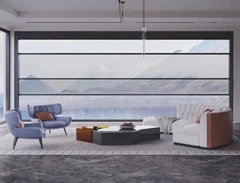
● Floor-to-ceiling glazing
● Corner windows
● Oversized openings
● Curved façades
● Minimalist frame designs
These designs rarely fit standard window sizes,custom manufacturers can produce windows tailored to exact architectural drawings, helping preserve the designer's original vision without costly field adjustments.For architects and developers, this flexibility is often invaluable.
Quality Control: Is There a Difference?
Not all manufacturers operate at the same quality level.
However, established custom manufacturers typically maintain tighter control over production because they oversee:
● Profile extrusion
● Fabrication
● Surface finishing
● Hardware integration
● Performance testing
● Packaging
Many also perform factory inspections for:
● Air tightness
● Water penetration
● Wind resistance
● Hardware operation
● Dimensional accuracy
Standard suppliers, especially distributors, may source products from multiple factories, making quality consistency more difficult to maintain.
Procurement Warning: Red Flags to Watch Out For
When vetting either a standard supplier or a custom manufacturer, watch out for these critical warning signs:
Vague Technical Answers: If a supplier cannot clearly explain their profile extrusion tolerances or thermal break methodology, they are likely a middleman trading on low margins.
Inability to Provide Shop Drawings: A lack of dedicated drafting or engineering support means you are on your own when on-site discrepancies arise.
Fragmented Supply Chains: Standard suppliers sourcing from shifting third-party factories often result in batch-to-batch color variations in powder coating or anodizing.
Which Offers Better Technical Support?
This is one of the biggest differences between the two.
Custom Manufacturers Usually Provide
● Shop drawing assistance
● Engineering consultation
● Structural calculations
● Thermal performance recommendations
● Glass specifications
● Installation guidance
● After-sales technical support
These services are particularly valuable for commercial projects where specifications frequently change during construction.
Standard Suppliers Usually Offer
● Product catalogs
● Basic installation instructions
● Standard warranties
● Limited technical consultation
For straightforward residential installations, this may be enough.For complex developments, it often isn't.
Lead Time: Which Delivers Faster?
Speed depends on your project requirements.
Standard Suppliers
Advantages:
● Inventory already available
● Immediate shipment
● Faster replacement orders
Ideal for:
● Renovations
● Emergency replacements
● Small residential projects
Custom Manufacturers
Production typically requires:
● Design confirmation
● Material preparation
● Fabrication
● Quality inspection
● Customized packaging
Although the delivery cycle is longer, the product is specifically tailored to your project, so advance planning is crucial.
Energy Performance and Building Codes
Commercial projects increasingly require compliance with strict energy regulations.
Custom manufacturers can often tailor window systems to achieve:
● Lower U-values
● Better thermal insulation
● Improved solar heat gain control
● Enhanced acoustic performance
● Local building code compliance
Standard products may meet general requirements but offer fewer opportunities for performance optimization.
OEM and Private Label Opportunities
For distributors and brand owners, this can be a deciding factor.
Many custom manufacturers provide:
● Private label branding
● Customized packaging
● Exclusive product designs
● Market-specific certifications
This allows distributors to build their own brands instead of selling generic products, a flexibility that standard suppliers rarely offer.
Which Is Better for Commercial Projects?
Commercial developments often involve:
● Hundreds or thousands of windows
● Multiple window types
● Strict project schedules
● Detailed engineering requirements
● Long-term maintenance planning
Custom manufacturers are generally better equipped to manage these complexities,they can coordinate production across multiple phases while maintaining consistency in finish, dimensions, and hardware.This becomes increasingly important as project size grows.
When Should You Choose a Standard Supplier?
A standard supplier may be the right choice if your project involves:
● Standard-sized openings
● Limited customization
● Tight purchasing budgets
● Immediate delivery requirements
● Small residential buildings
● Basic renovation projects
In these situations, the simplicity and availability of stock products can save both time and money.
When Is a Custom Window Manufacturer the Better Choice?
A custom manufacturer is usually the better option if your project includes:
● Commercial office buildings
● Hotels
● Schools
● Hospitals
● Apartment developments
● Luxury residential projects
● Export distribution
● OEM business
● Large-scale construction
The additional engineering support, manufacturing flexibility, and quality control often justify the higher upfront investment.
Questions to Ask Before Choosing a Supplier
Before placing an order, ask these important questions:
|
Question |
Why It Matters |
|
Can you manufacture custom dimensions? |
Prevents costly on-site adjustments |
|
What certifications do your products have? |
Confirms regulatory compliance |
|
Do you provide shop drawings? |
Helps avoid installation errors |
|
Can you support OEM branding? |
Important for distributors |
|
What is your production capacity? |
Ensures reliable delivery |
|
How is quality inspected? |
Reduces defects and warranty claims |
|
Do you provide after-sales support? |
Simplifies future maintenance |
A supplier's answers often reveal more than their price list.
Why Many Commercial Buyers Prefer Factory-Direct Manufacturers
Rather than purchasing through multiple intermediaries, many contractors now work directly with experienced manufacturers.
Factory-direct partnerships often provide:
● Better communication
● More competitive pricing
● Faster technical responses
● Consistent product quality
● Greater customization
● Stable long-term supply
For project-based procurement, direct manufacturing partnerships are becoming increasingly common across global construction markets.
Ready to Optimize Your Next Project?
Stop letting rigid standard catalogs limit your architectural vision or inflate your on-site modification costs. Partner with an experienced, factory-direct manufacturing team equipped with CNC-automated production and full OEM/ODM capabilities. [Contact our engineering team today for a free project consultation and custom shop drawing review.]
Final Verdict: Which Should You Choose?
There is no universal answer because every project has different priorities.
Choose a standard supplier if you need:
● Lower upfront costs
● Fast delivery
● Standard-sized windows
● Simple residential applications
Choose a custom window manufacturer if you value:
● Tailored engineering
● Superior design flexibility
● OEM or private label opportunities
● Commercial project expertise
● Long-term lifecycle performance
● Consistent production quality
For most commercial developments, custom window manufacturers provide greater value over the life of the building. Their ability to combine engineering support, precision manufacturing, and project-specific solutions makes them the preferred partner for contractors, developers, distributors, and brand owners seeking reliable, long-term results.
FAQs
1. Are custom windows worth the extra cost?
Yes. For commercial and high-end residential projects, custom windows often reduce installation challenges, improve building performance, and lower long-term maintenance costs.
2. Do custom window manufacturers have longer lead times?
Generally, yes. Because products are built to project specifications, manufacturing takes longer than shipping standard inventory. Proper project planning helps avoid delays.
3. Can custom manufacturers produce OEM windows?
Yes. Many custom window manufacturers offer OEM and private label services, allowing distributors and brand owners to market products under their own brand.
4. Are standard window suppliers suitable for commercial buildings?
They can be suitable for smaller commercial projects with conventional window sizes, but large developments usually benefit from the engineering and customization offered by custom manufacturers.
5. What should contractors look for when selecting a window manufacturer?
Contractors should evaluate manufacturing capacity, certifications, customization capabilities, quality control processes, technical support, warranty coverage, and experience with similar commercial projects.